
Choosing a Competitive Gymnastics Club: Why Culture Matters
Choosing a competitive gymnastics club can involve a lot of practical questions, from how many hours your child will be training and what level they will compete at, to who will be coaching them, what that coach is like and what facilities the club has to offer.
While these are all valuable things to know, when a gymnast is spending hours in the gym each week, we think there is another question worth asking: what kind of environment will they be training in?
At Inner West Gymnastics, this is something we have spent a lot of time thinking about as we continue to build our competitive Women's Artistic Gymnastics (WAG) program in Sydney. Much of that thinking is captured in our Cultural Compass, developed by our High Performance Head Coach and Manager, Karl Shore, drawing on more than 30 years of experience as both an athlete and coach.
Our Cultural Compass helps guide how we want our competitive program to develop, giving our coaches and gymnasts a shared understanding of the culture we are working to build around training, competition, challenge and progress. For us, high-performance gymnastics and athlete wellbeing aren't separate conversations, and the environment around an athlete is an important part of how we approach both.
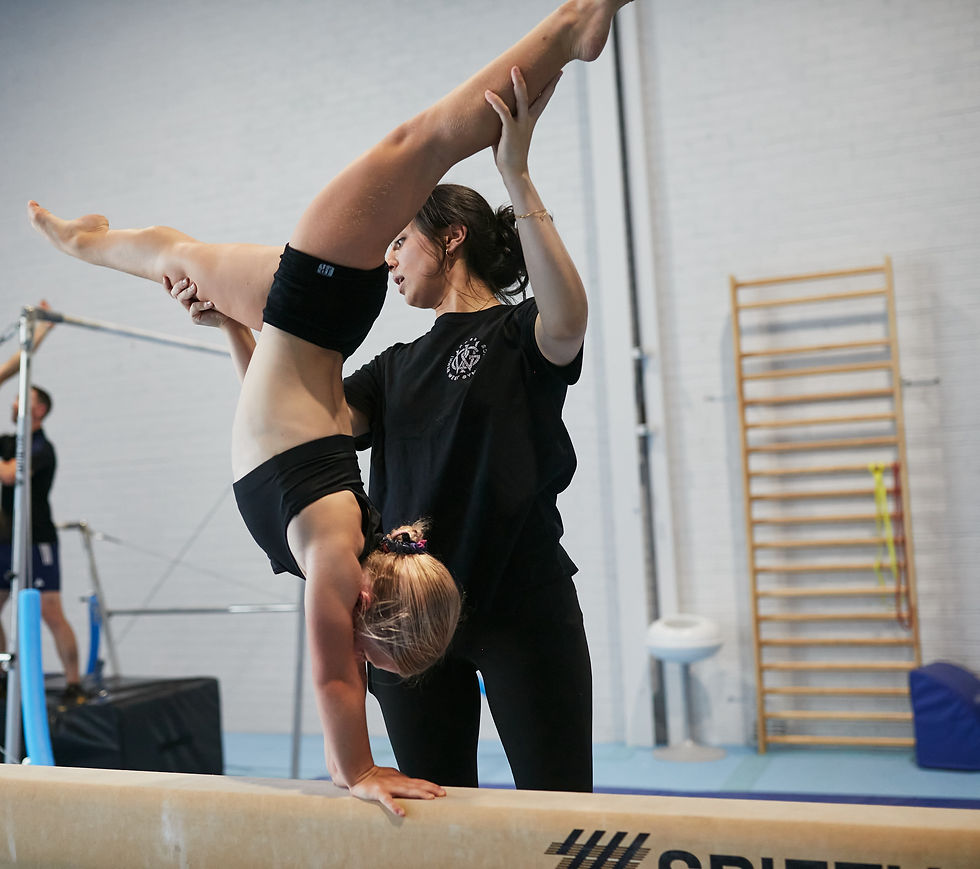
How should competition results fit into athlete development?
Results are an important part of competitive gymnastics, with gymnasts training towards competitions, working on individual and team goals and, understandably, wanting to see that work reflected when they compete.
A score or placing, however, is only one part of how we can look at a performance. A gymnast may not place on the podium but still leave the competition proud because they executed a skill the way they had been practising it, responded differently when something didn't go to plan or managed the pressure of competing better than they had before.
For coaches, competitions can also provide useful information to take back into the gym, whether that's seeing what held up well under competition conditions, identifying something that needs more work or looking at why something happened differently from training.
Our recent trip to the 2026 National Clubs Gymnastics Carnival gave our gymnasts and coaches another opportunity to do exactly that, with IWG attending National Clubs as a team for the first time.
While the scores form part of that experience, what our gymnasts and coaches learnt from the week can now feed back into training as they work towards their next goals and competitions.
Does progress in competitive gymnastics always mean moving up?
For families involved in competitive gymnastics, questions around progression come up regularly. A gymnast might be excited to learn a particular skill or move into the next level and, as parents, it's understandable to want to see your child developing, while their coaches want to see them progress too.
From the experience of our coaching team, sometimes the right next step is a new skill or moving into another level, while at other times it may be more beneficial for that gymnast to spend a little longer developing the strength, technique, consistency or confidence that will prepare them for what comes next.
For the team at IWG, an important question isn't only how quickly a gymnast can progress, but whether they are ready for what they are progressing to.
As gymnastics skills become more complex, the foundations underneath them continue to matter, so spending additional time on a progression isn't necessarily the same as being held back. In some cases, that additional time may be what gives a gymnast the base they need to progress more confidently and effectively later.
At the same time, we don't want to decide what someone's ceiling is before they have had the opportunity to explore it. Our coaches look at the gymnast in front of them, where they are now, what they're working towards and what needs to be in place to help them get there.

What should the relationship between a gymnast and coach look like?
Competitive gymnasts can spend a significant amount of time with their coaches each week, particularly as they progress through the higher levels of the sport, so that relationship naturally becomes an important part of their experience.
At IWG, we want our gymnasts to increasingly understand and participate in their own development as they grow, whether that's communicating what they're feeling during training, asking questions, understanding feedback or beginning to recognise what helps them learn.
That doesn't mean a gymnast decides which skill or progression they should do next, as coaches still have a responsibility to consider preparation, technique, safety and the broader training program. It does mean we want there to be room for communication between the two.
If something isn't working, that gives the coach and gymnast information to work with, while if a gymnast doesn't understand why they're doing a particular drill, there is an opportunity to explain how it connects to what they're working towards.
As gymnasts develop their skills, we also want them to develop a better understanding of themselves as athletes, so that coaching becomes something they are actively involved in rather than something that simply happens around them.
Breathe. Build. Belong.
If you've come across Inner West Gymnastics before, you may already have seen the words Breathe. Build. Belong.
They are our core values and sit alongside our Cultural Compass in helping guide the environment we want to create across the gym.
For us, Breathe creates space to pause, reflect and enjoy the process, while Build recognises that skills, strength, confidence and resilience develop over time. Belong reflects the community around that process, where gymnasts, coaches and families all have a part to play.
Within our competitive program, these ideas give us a reference point when we're thinking about how ambition, athlete wellbeing, individual development and being part of a team can work alongside one another.
Our Cultural Compass takes that thinking further by helping create shared expectations around the way we train, coach, communicate and approach challenges, so that culture isn't separate from the gymnastics being taught, but part of how the program itself is being built.
What should you consider when changing gymnastics clubs?
Families can start looking at different competitive gymnastics clubs for all sorts of reasons. Sometimes a gymnast's goals have changed, sometimes they're looking for a different training environment or new opportunities, and sometimes the practical side of training no longer works for the family.
If you're considering a change, we think it's worth taking some time to work out what you're actually looking for before deciding what comes next.
What does your child enjoy about their current program, and what would they like to be different? What are they hoping to achieve in gymnastics? What type of coaching helps them respond and learn? How many hours of training realistically work for your family? Are there things about their current program that you would absolutely want to keep?
The answers are going to look different from one gymnast to another, and they can also change as a gymnast gets older and their relationship with the sport develops.
For gymnasts considering a move to IWG, we want to understand some of those things too. Someone coming from another competitive gymnastics program brings their own training history, experiences and goals with them, so before making decisions about where they fit within our program, we want to get to know where they're currently at and what they're looking for next.
That gives you the opportunity to get to know us too, because choosing a new gymnastics club isn't only about whether a gymnast fits a program, it's also about whether the program, its coaches and its approach fit the gymnast.

Looking for competitive gymnastics in Sydney?
Inner West Gymnastics offers competitive Women's Artistic Gymnastics from our purpose-built gymnastics centre in Strathfield South, Sydney, with WAG programs across Levels 1-10 and a focus on athlete development, high performance and competitive gymnastics.
Our location places us close to Strathfield, Burwood, Homebush and surrounding areas, but competitive gymnastics doesn't always fit neatly within suburb boundaries, particularly as training hours increase and families begin looking for a program that suits the individual gymnast.
If the approach we've described here sounds similar to what you're looking for, we'd be happy to learn more about your gymnast, their current level and what you're looking for in their next training environment.

Comments